Part 2: Age and Gender Specific Screening in Saudi and MENA Sport
Effective medical screening in Saudi Arabia and across the MENA region must reflect how athletes grow, mature, communicate, and make decisions within their environments. A single template cannot meet the needs of a 12-year-old girl, a 17-year-old boy, or an adult female player. Each group carries different physiological, hormonal, cultural, and safeguarding realities, and the system must be built around those differences.
In this region, the core framework remains consistent: youth screening is guardian-led, while senior athletes require autonomy, confidentiality, and direct communication. Bilingual clarity and early detection of risk remain constant across all levels.
Family influence often continues into adult sport, shaping disclosure, decision-making, and trust. Screening systems must therefore flex with age, gender, and cultural context, not against them.
Designing Age-Specific Screening Pathways
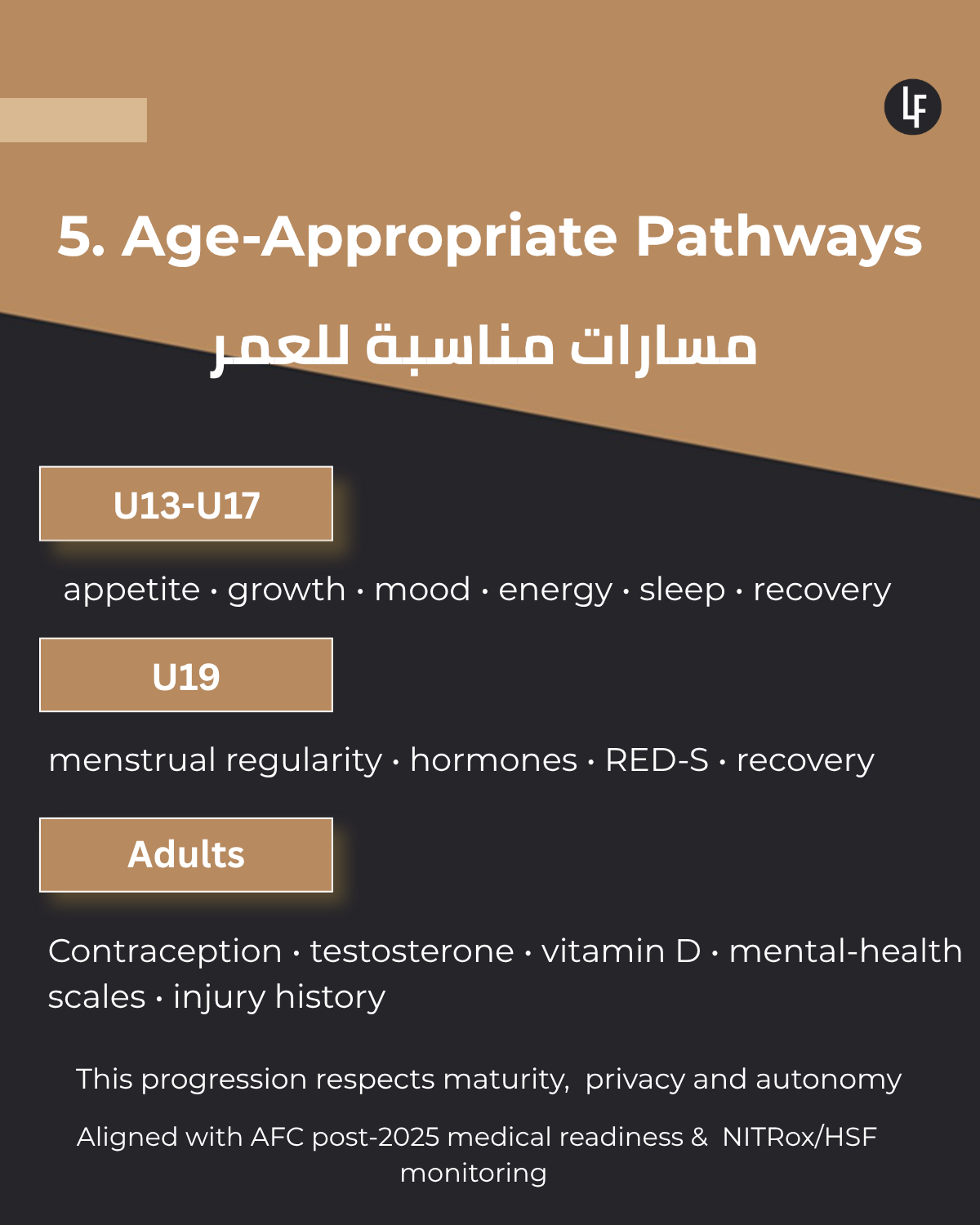
U13–U15: Early Indicators and Guardian Support
Younger athletes require simple language, guardian-supported disclosure, and questions that capture appetite, growth, sleep, mood, and early injury patterns. These areas provide the first signals of maturation, emerging habits, and energy balance in the region.
This stage is less about diagnosis and more about establishing safe communication, understanding developmental patterns, and building a foundation for long-term athlete health.
U17–U19: Increasing Autonomy and Detail
By late adolescence, athletes can self-report more independently. Screening expands to include detailed injury history, recovery patterns, and early hormonal or nutritional red flags such as unexpected weight loss, frequent illness, or prolonged recovery.
This progression respects maturity, privacy, and the athlete’s growing independence while maintaining cultural alignment.
Designing Gender Specific Screening Pathways
Female Athletes
For girls and women, screening must include menstrual regularity, cycle-related symptoms that affect training or matches, hormonal symptoms, RED-S indicators, and contraception where relevant. These elements are essential for culturally aligned, medically accurate disclosure in Saudi and MENA environments.
The framing must be factual, modest, and aligned with regional expectations while still enabling early detection of risk.
Across Both Genders
Respiratory issues remain a key consideration across the Gulf region due to climate, dust, and sand exposure. These factors influence training tolerance, recovery, and overall athlete availability. Screening must therefore include questions on breathing difficulty during exertion, seasonal symptoms, inhaler use, and any history of exercise‑induced bronchoconstriction. In Saudi and MENA environments, these items are essential for accurate risk identification and for ensuring that athletes can train and compete safely across varying environmental conditions.
Male Athletes
Screening for boys and men focuses on testosterone-related fatigue, vitamin D deficiency, appetite-sleep-mood interactions, and energy-availability symptoms. These issues are often under-reported in the region and can contribute to low bone density, osteoporosis risk, and recurrent illness.
Cultural, Linguistic, and Safeguarding Alignment
Youth
Guardian identity, bilingual confidentiality, and culturally safe disclosure.
Adults
Athlete autonomy, privacy, and direct communication with medical and performance staff.
Across all levels
Family influence remains a constant factor, and systems must adapt accordingly. This alignment is foundational to trust, safety, and accurate reporting.
Medical Governance Alignment
A region-aligned screening structure must meet the expectations of:
- SCFHS medical screening standards
- SAFF safeguarding requirements
- PDPL data protection regulations
- Olympic and multi-sport baseline medical frameworks
Including RED-S, bone health, concussion, and cardiovascular items enables early risk detection and protects athlete availability across clubs, academies, and federations.
Why This Matters for Saudi and MENA Sport
Age- and gender-specific screening is not an administrative detail. It is a system-design decision that shapes:
- athlete safety
- family trust
- early identification of risk
- long-term athlete availability
- alignment with national and regional governance
- readiness for Vision 2030 performance expectations
Culturally aligned screening is the foundation for early intervention and long-term development in Saudi and MENA sport.
Next in the Series
Part 3 will explore why blood testing must be standardised across Saudi football, MENA sport, and Olympic pathways, and how coordinated models already used in Jordan can strengthen early detection and long-term athlete development.